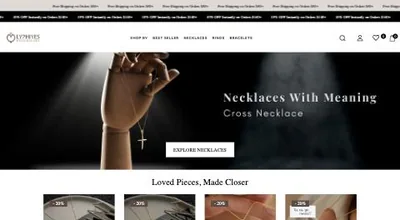
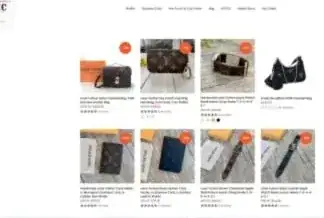
Dropshipping is an ecommerce model where you sell products without holding stock. A customer orders from your store, you pass the order to a supplier, and the supplier ships directly to the customer. You keep the difference between your price and the supplier's. Thanks to its supplier apps and integrations, Shopify is one of the most popular platforms for it.
But dropshipping in 2026 isn't what it was a few years ago. The US and the EU have removed the customs breaks that low-value parcels relied on, product safety rules have tightened, and ad costs keep rising. This guide explains how dropshipping works, what changed, which approaches still make sense, and how to set up a Shopify dropshipping store step by step.
How dropshipping works
- You list the product. Import the supplier's products into your Shopify store at your own price.
- The customer orders. They pay in your store, at your price.
- You forward the order. Automatically through an app or manually; you pay the supplier the wholesale price.
- The supplier ships. The product goes from the supplier's warehouse straight to the customer, and tracking syncs to your store.
To the customer, you are the seller. That makes you responsible for everything from product quality and delivery times to returns and customer service.
Dropshipping compared with other models
| Model | Stock | Margin | Control | Best for |
|---|---|---|---|---|
| Dropshipping | None | Low–medium | Product and shipping with the supplier | Testing products and markets |
| Stocked inventory | Yes | Medium–high | Full | Scaling a proven product |
| Print on demand | None | Medium | Design is yours, production is the supplier's | Selling your own designs |
| Private label | Yes | High | Full | Building a long-term brand |
Pros and cons
Pros: no money tied up in stock, no warehouse or packing, low-risk product testing, and a business you can run from a laptop.
Cons: thin margins, because many stores sell the same products. Shipping times and quality are out of your hands. Delayed stock updates mean selling items that are gone. Supplier mistakes land on your reviews and ad accounts. Most successful dropshipping stores move to stocked inventory or their own brand once they find a winning product.
What changed in 2026
Classic dropshipping relied on shipping small parcels from suppliers in China to customers worldwide with little or no duty. Over the past year, that foundation changed in the biggest markets.
United States: the $800 de minimis exemption is gone
The de minimis exemption, which let parcels under $800 enter the US duty-free, ended for all countries on 29 August 2025. Every parcel now faces duties based on its country of origin, and postal shipments were for a period charged a flat fee of $80 to $200 each. Stores shipping into the US from abroad have had to raise prices, switch to US-based suppliers or move stock into the US.
European Union: €3 duty and the GPSR
- Customs: on 1 July 2026 the EU scrapped the customs exemption for parcels worth €150 or less. Goods shipped from outside the EU directly to consumers now pay a €3 duty per tariff line. It's a transitional measure scheduled to run until mid-2028, when the EU Customs Data Hub is expected to launch.
- Product safety (GPSR): since 13 December 2024, consumer products sold in the EU need an economic operator based in the EU. If you sell into the EU from outside it, you need an EU Responsible Person and must show manufacturer and Responsible Person details on product pages. Shopify doesn't provide this service; third-party providers do.
- Product liability in Germany: under the new law taking effect on 9 December 2026, a seller can be held liable like a manufacturer when the manufacturer is outside the EU and there's no importer or authorised representative in the EU.
In short: the era of cheap parcels from China to everywhere is closing. In 2026, the dropshipping stores that win ship from close to their customers and stand behind their products.
Three approaches that still work
1. Local suppliers in your customers' market
Work with suppliers that hold stock in the country you sell to. Platforms such as Syncee, Spocket and AutoDS list suppliers with US, UK and EU warehouses, and many wholesalers share product feeds you can sync to Shopify. Delivery is faster, returns stay domestic and customs costs disappear. Agree stock update frequency, dispatch times, returns and damaged-goods handling in writing.
2. Shopify Collective
Shopify Collective lets you sell another Shopify brand's products without holding stock. Inventory and pricing sync continuously from the supplier, the supplier ships the order, and shipping notifications come from your store. Both stores need Shopify Payments, a business in one of the 38 supported countries, and the same country and currency as their partner. If you qualify, it's one of the most reliable ways to dropship because both sides are established Shopify brands.
3. Print on demand
Put your own designs on T-shirts, mugs, posters or phone cases and let a print partner produce and ship them. The large print-on-demand providers have production sites in the US and Europe, so they're less exposed to the customs changes, and because the designs are yours, you're not selling the same product as everyone else. See our guide to print-on-demand T-shirts.
Setting up a Shopify dropshipping store, step by step
- Get the legal basics right. Register your business, understand your sales tax or VAT obligations, and prepare compliant legal pages (terms, privacy, returns, shipping).
- Choose a niche and products. Look beyond trending items: focus on products that solve a problem, don't break easily and have few sizing issues. Very cheap products rarely survive ad and shipping costs.
- Test your supplier. Order samples to yourself before you sell. See the packaging, shipping time, quality and communication first-hand.
- Pick your Shopify plan. Basic is enough for most new stores. Compare plans and fees with our Shopify plan calculator.
- Import products. Use the app that fits your suppliers: DSers, the official AliExpress partner; AutoDS, Syncee, Spocket or CJdropshipping for suppliers in other markets; or the Collective app if you qualify. Make sure stock syncs frequently.
- Rewrite product content. Don't copy supplier text and images. When the same description appears on hundreds of sites, you won't stand out in Google. Write your own descriptions, sizes and usage notes, and shoot your own photos where you can.
- Price for profit. Factor in product cost, shipping, payment fees, ads, duties and a returns allowance. Our Shopify profit calculator shows what's left per order.
- Be honest about delivery. Show realistic delivery times on product pages, and align your returns address and process with your supplier.
- Handle compliance for each market. For EU customers, add GPSR manufacturer and Responsible Person details; for the US, price in duties or use suppliers that ship domestically.
- Set up tracking and marketing. Confirm GA4, Meta and Google Ads conversions with a test order (thank you page tracking guide), then start ad tests on a small budget.
Profit maths: an example
The table below is purely illustrative. Run the numbers with your own costs.
| Item | Amount |
|---|---|
| Selling price | $40.00 |
| Product cost paid to supplier | −$14.00 |
| Shipping | −$5.00 |
| Payment processing (2.9% + $0.30) | −$1.46 |
| Ad cost per order | −$12.00 |
| Returns and damage allowance | −$1.50 |
| Left per order | $6.04 |
In this example, a $40 sale leaves about $6 before fixed costs like your Shopify plan, apps and accounting, and before any sales tax or VAT. The biggest variable in dropshipping is usually ad cost per order. Set prices from this calculation; rules like "double the product cost" rarely hold up. Add up your fixed costs with our Shopify store cost calculator.
Common mistakes
- Hiding delivery times: it comes back as refunds, complaints and chargebacks.
- Selling without samples: you'll learn about quality problems from your customers.
- Neglecting stock sync: selling items the supplier has run out of leads to cancellations.
- Using supplier images as-is: it costs trust and SEO, and some images carry copyright issues.
- Selling branded or counterfeit goods: a legal risk that can also get your ad and payment accounts closed.
- Relying on one supplier: find a backup for your best sellers.
- Ignoring pricing rules: reference prices in sales are regulated: Shopify Black Friday 2026 checklist.
Is dropshipping still worth it in 2026?
Yes, with the right expectations. It's still the fastest low-capital way to test a product idea or a market, but it isn't easy money. The sustainable approach in 2026: start with suppliers close to your customers, move to stocked inventory or your own brand once you find a product that sells, and build your store like a real brand from day one.
For the basics of the model, read what dropshipping is and our guide to Amazon dropshipping. If you'd like your dropshipping store set up properly, our Shopify store setup service can help.
Sources: Anadolu Agency on the EU €3 duty. This article is general information, not legal or tax advice. Information current as of 11 November 2026.
Frequently asked questions
Is dropshipping legal?
Yes. Dropshipping is a legal business model, but you are the seller in the eyes of your customer and the law. Product safety, accurate descriptions, delivery, returns and consumer rights are your responsibility, even when the supplier makes the mistake.
Can I still dropship from AliExpress to the US or EU?
You can, but it got more expensive. The US ended its $800 de minimis exemption for all countries on 29 August 2025, so every parcel is now subject to duties. The EU introduced a €3 customs duty per tariff line on low-value parcels from 1 July 2026, and non-EU sellers need an EU Responsible Person under the GPSR. Suppliers with warehouses in your customers' market are now usually the better choice.
What is Shopify Collective?
Shopify Collective lets one Shopify store sell another Shopify store's products without holding stock. Both stores need Shopify Payments, a business in one of the 38 supported countries, and the same country and currency as their partner. Inventory and prices sync automatically, and the supplier ships the order.
Do I need a business to start dropshipping?
In most countries, selling online regularly for profit counts as trading, which brings tax registration, invoicing and consumer law duties. Check the requirements in your country with an accountant before you launch.
How much money do I need to start?
Less than a stocked store, but not zero: your Shopify plan, theme and apps, business and accounting costs, sample orders and, usually the biggest item, advertising. Our Shopify store cost calculator helps you add up the fixed costs.

Author
Uğur KeskinFounder @ShopiuzmanFounder of Shopiuzman. He builds, migrates and grows Shopify stores for brands in Türkiye, Europe and the US, and leads the development of our apps on the Shopify App Store.